
Modern homes are slowly shifting away from loud, heavily decorated kitchens toward spaces that feel calm and practical. MUJI kitchen design reflects this change by focusing on simplicity, natural materials, and thoughtful organization. Instead of treating the kitchen as a visual centerpiece, MUJI-inspired spaces act as quiet backdrops for daily routines like cooking, cleaning, and shared meals.
Rooted in Japanese design philosophy, MUJI kitchens emphasize usefulness over decoration and balance over excess. Natural wood surfaces, soft neutral colors, and clean layouts help create kitchens that feel open, comfortable, and easy to live with.
Here are 10 MUJI kitchen design ideas that bring calm, functionality, and timeless simplicity into modern homes.
1. Natural Wood Cabinets as the Foundation
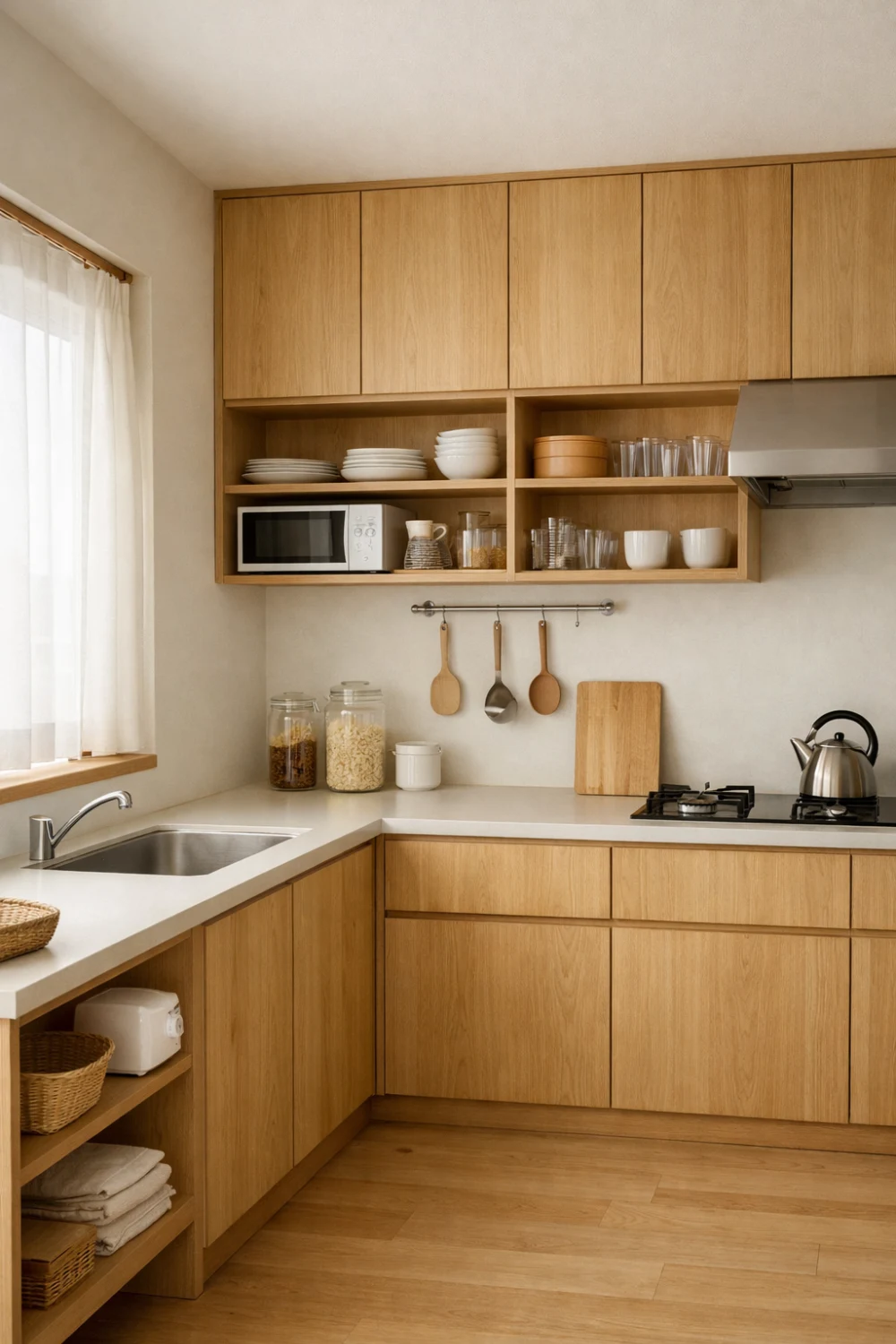
Natural wood plays a central role in MUJI kitchen design. Light woods such as oak, ash, or birch bring warmth without making the kitchen feel heavy or dark. Unlike glossy or heavily patterned cabinetry, MUJI cabinets highlight subtle textures that age beautifully over time.
Wood cabinetry also helps connect the kitchen with the rest of the home. The natural tones create a welcoming atmosphere and make the space feel grounded and familiar.
2. Simple Cabinet Forms with Clean Lines
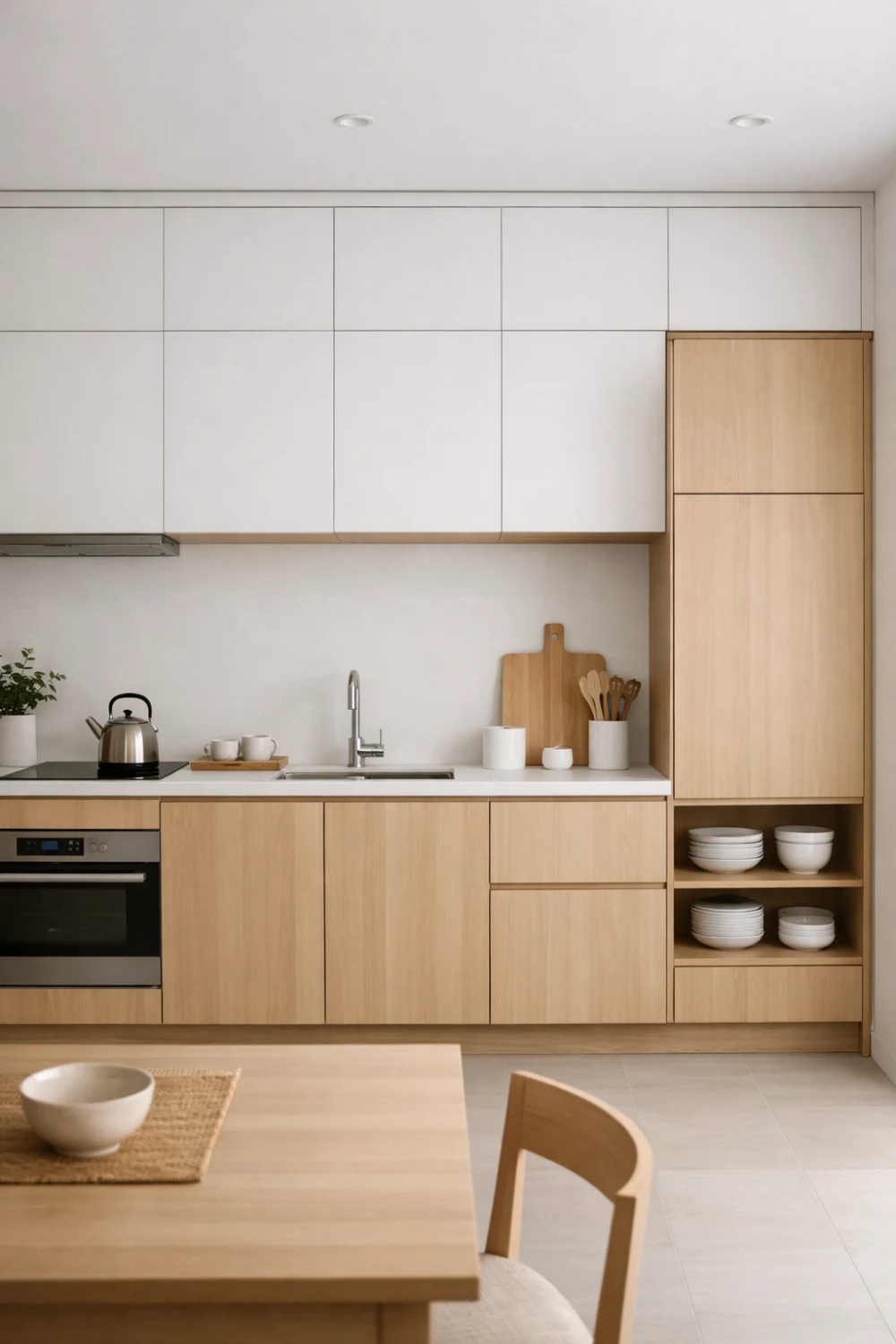
MUJI kitchens rely on cabinet designs that feel uncomplicated and visually calm. Flat-panel doors, minimal framing, and smooth surfaces create a sense of order throughout the space.
This simplicity is especially important in smaller kitchens. When cabinet lines remain clean and consistent, the room feels balanced and visually quiet rather than busy.
3. Open Shelving Used Thoughtfully
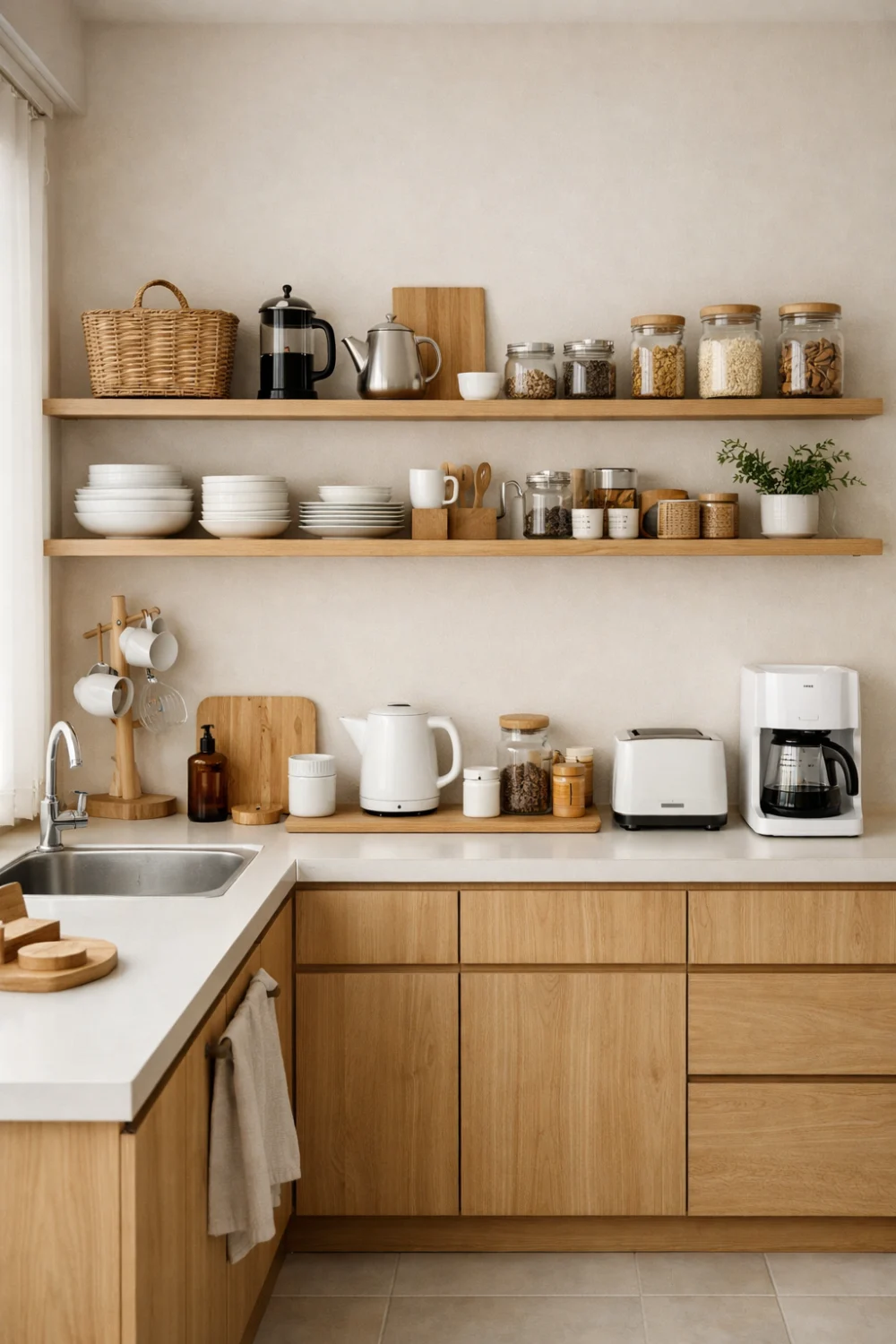
Open shelving is a common feature in MUJI kitchens, but it is used with restraint. Instead of filling shelves with many objects, only a few essential items are displayed.
Ceramic dishes, glass jars, and wooden utensils can become part of the design while still maintaining a clean appearance. Leaving empty space around items allows the kitchen to feel breathable and organized.
4. Soft Neutral Color Palettes
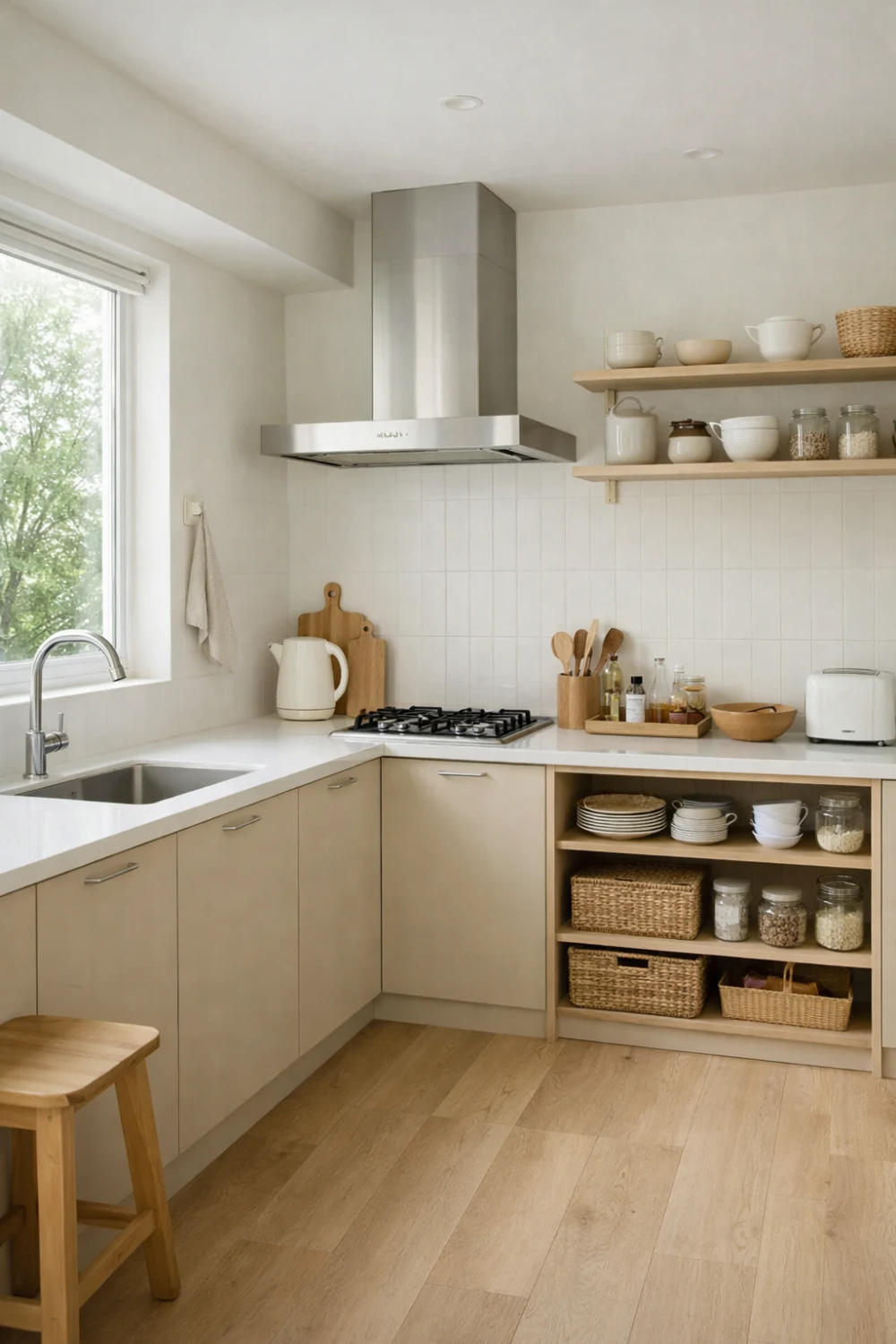
Color choices in MUJI kitchens remain calm and understated. Shades like soft white, warm grey, beige, and natural stone create a peaceful visual background.
These neutral tones reflect light naturally, making kitchens feel brighter and more spacious. They also provide flexibility, allowing the design to remain timeless even as trends change.
5. Practical Storage That Supports Daily Life
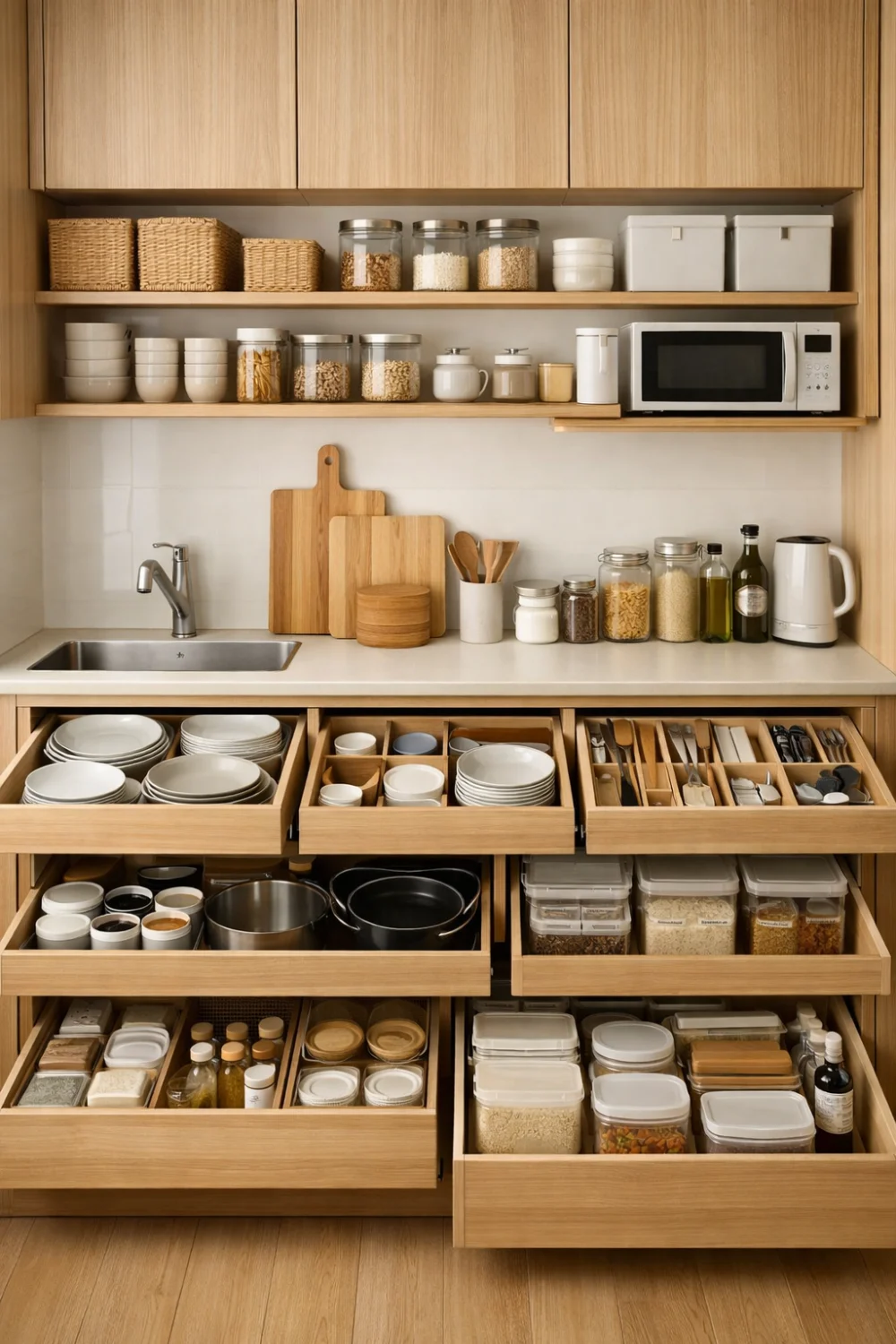
Storage in MUJI kitchens focuses on everyday usability. Cabinets and drawers are designed to keep items easy to reach and clearly visible.
Well-organized storage reduces clutter on countertops, helping the kitchen maintain a calm and tidy appearance. This thoughtful approach ensures the space supports real daily routines rather than purely decorative design.
6. Minimal Hardware That Blends Into the Design
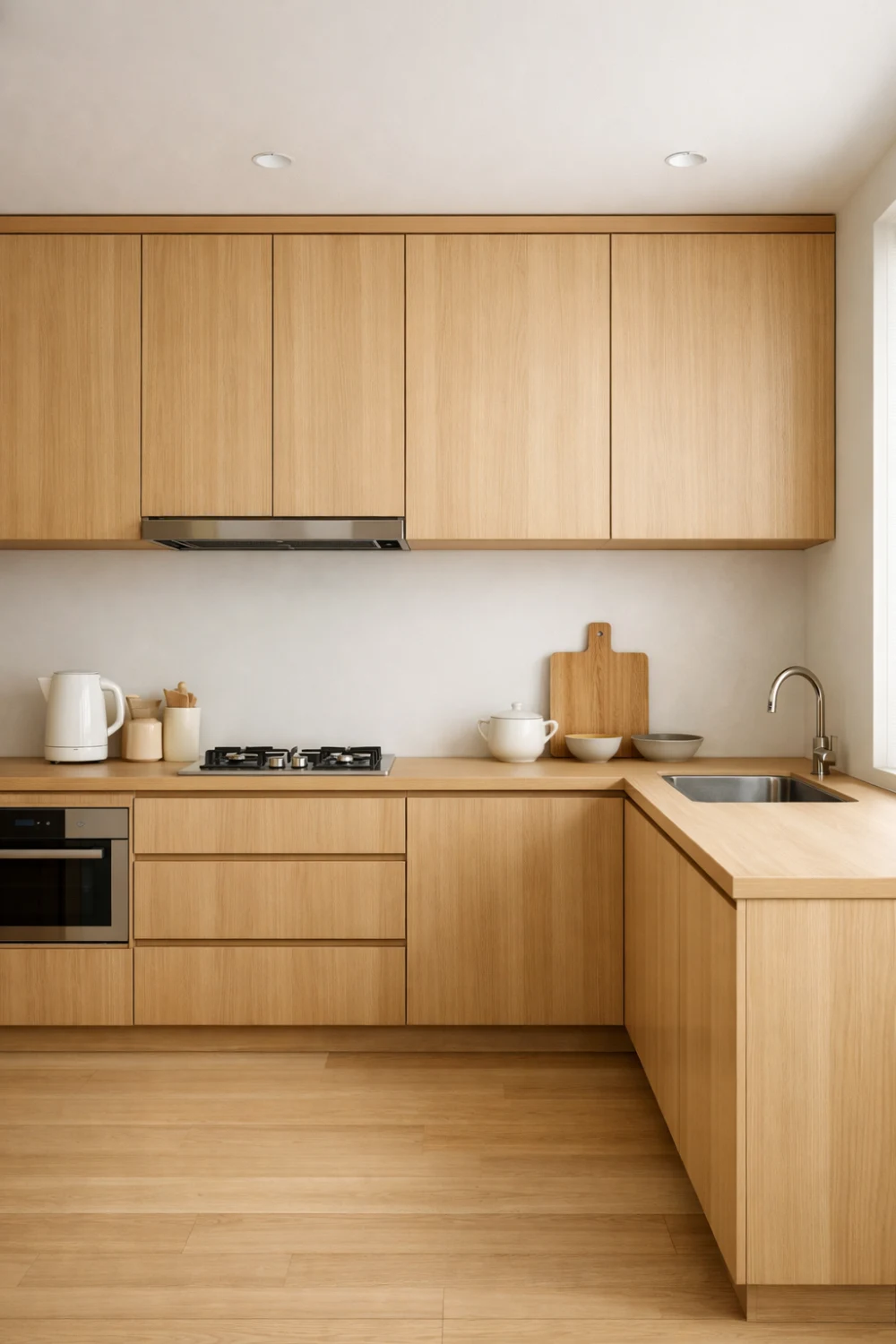
Handles and hardware in MUJI kitchens are designed to remain subtle. Many cabinets feature integrated handles or slim pulls that blend into the cabinet surface.
When hardware is visible, it often uses simple materials like brushed metal or natural wood. These understated details maintain the overall simplicity of the space.
7. Compact Layouts for Modern Living
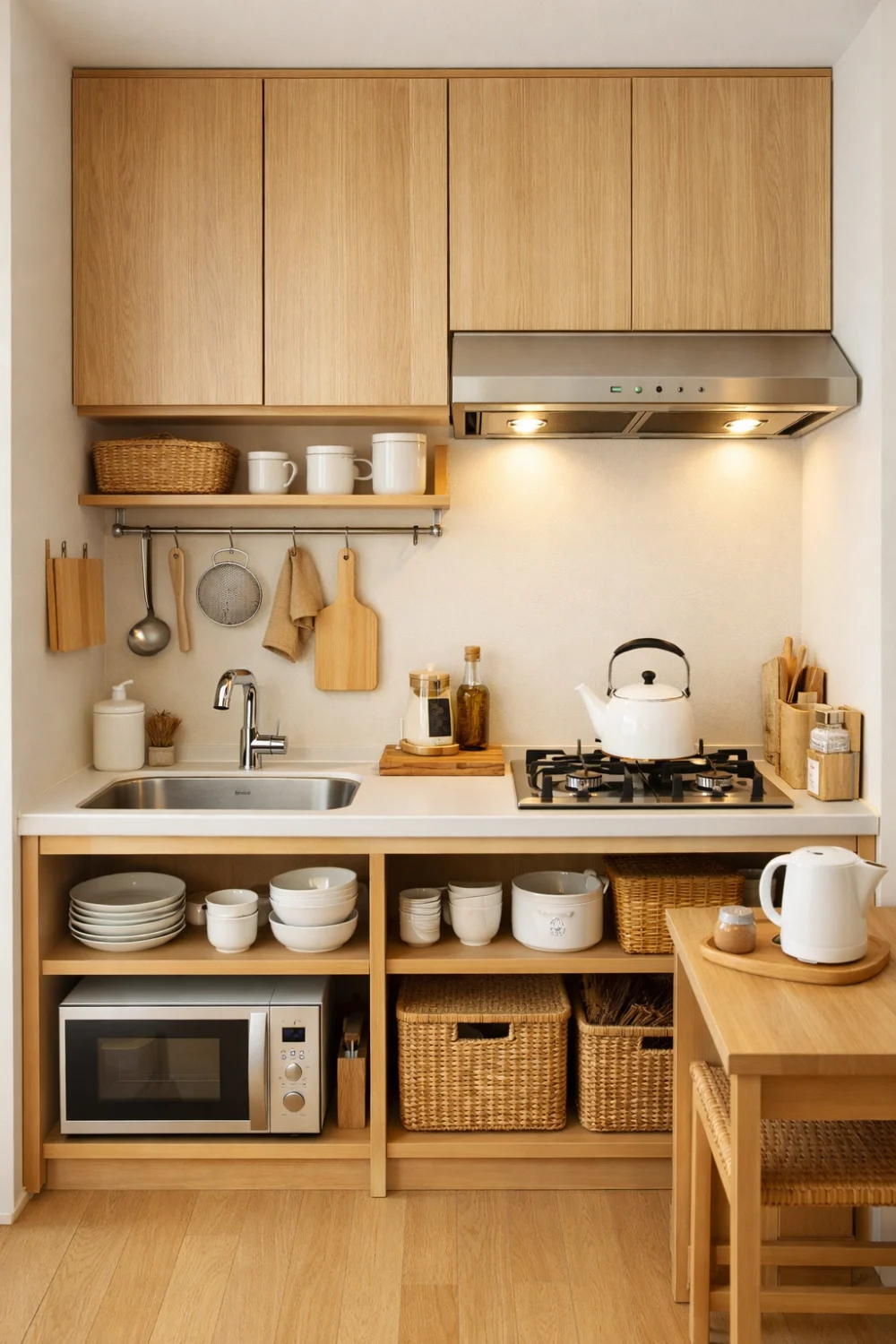
MUJI kitchens often appear in apartments or compact homes where space is limited. Instead of adding unnecessary features, layouts focus on efficiency and movement.
Work areas such as the sink, stove, and preparation space are placed close together to improve workflow. This thoughtful arrangement makes even small kitchens feel comfortable and practical.
8. Soft Lighting That Feels Comfortable
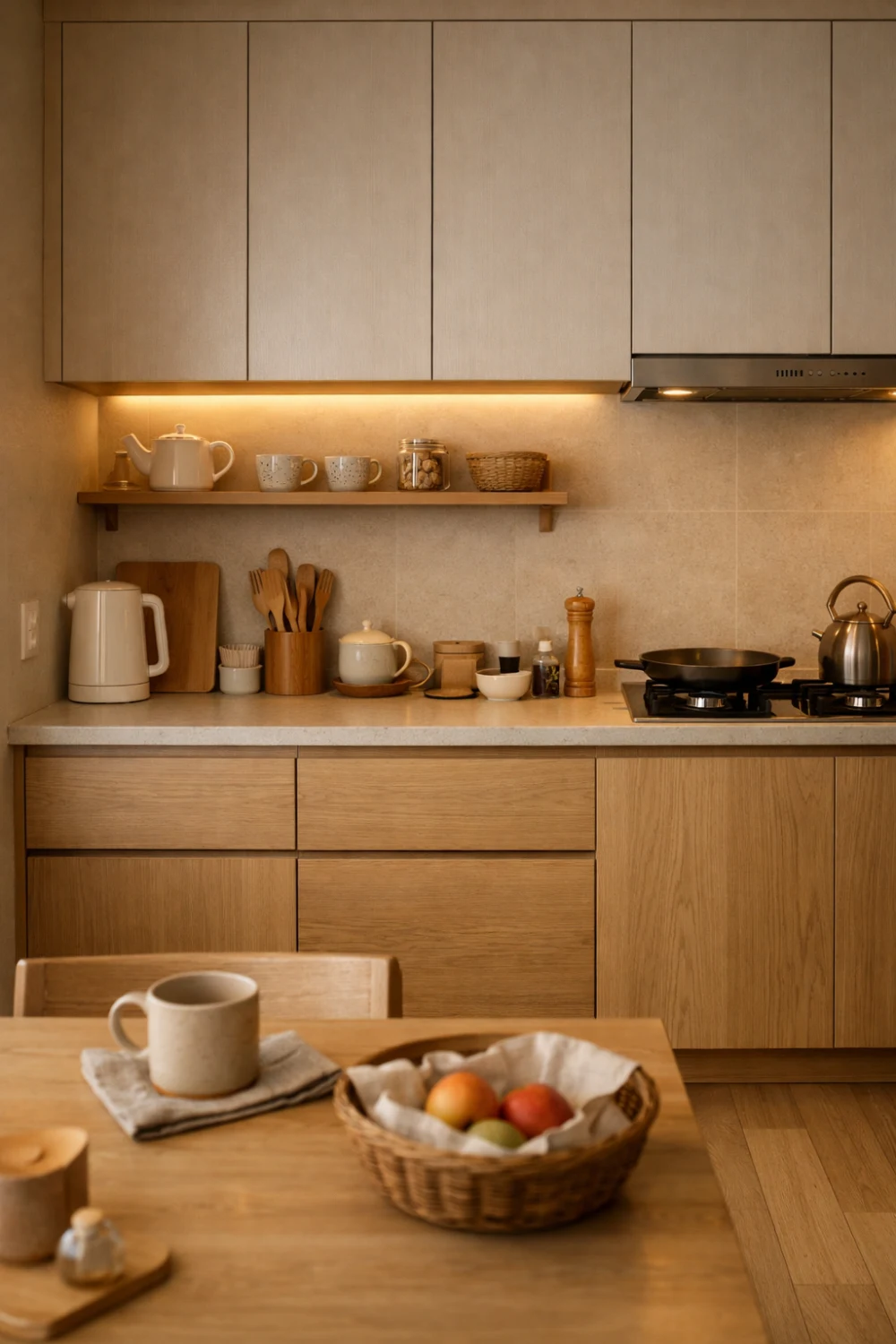
Lighting in MUJI kitchen design is warm and gentle rather than overly bright. Soft overhead lighting and concealed under-cabinet lights create a relaxed atmosphere.
This layered lighting approach supports daily activities like cooking while maintaining a calm mood. The goal is to make the kitchen feel welcoming throughout the day and evening.
9. Seamless Flow Between Kitchen and Living Space
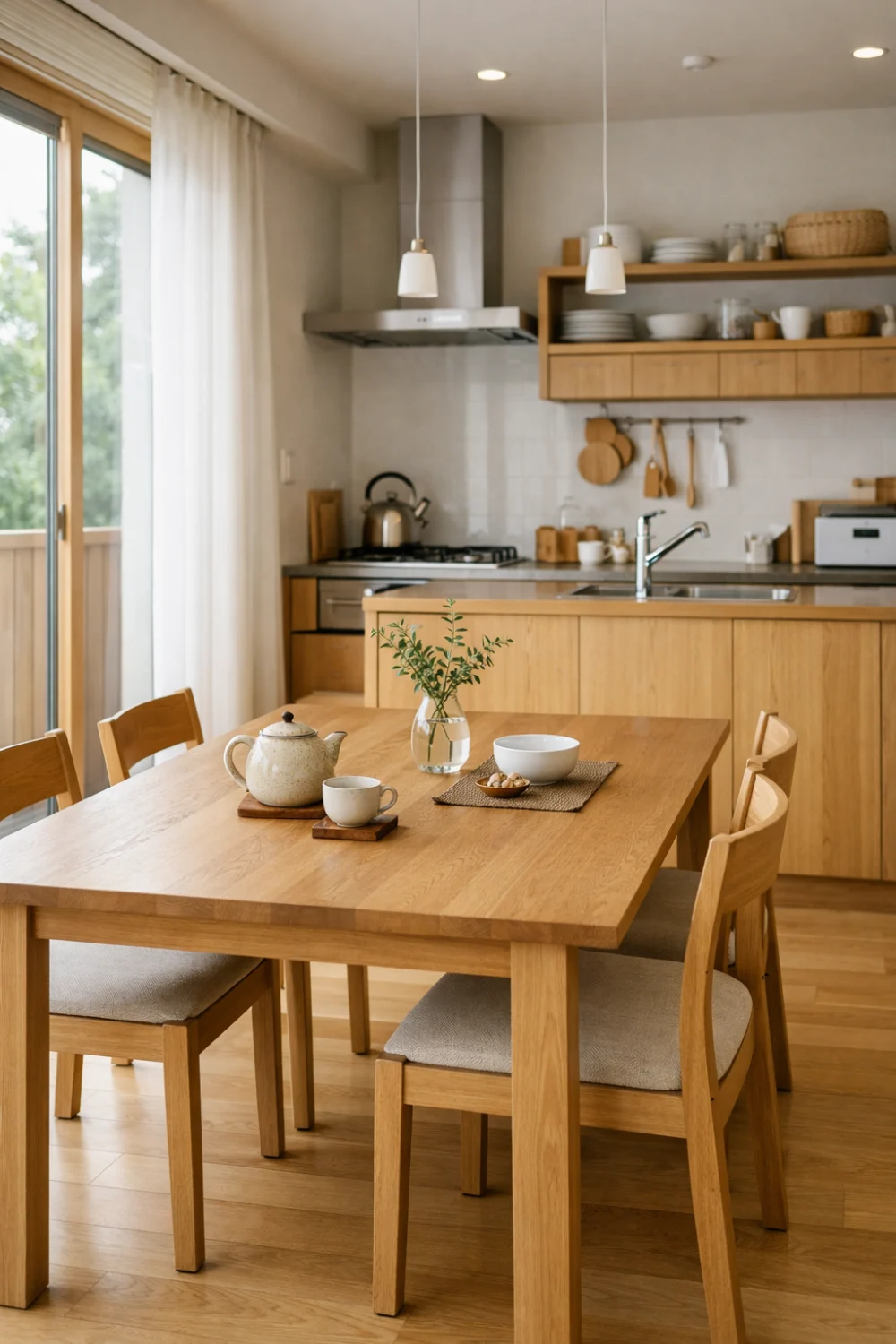
In many modern homes, MUJI kitchens blend naturally into nearby living and dining areas. Materials, colors, and design elements flow from one space to another.
This continuity helps open-plan homes feel cohesive and balanced. Instead of feeling separated, the kitchen becomes part of the larger living environment.
10. Timeless Design That Encourages Simplicity
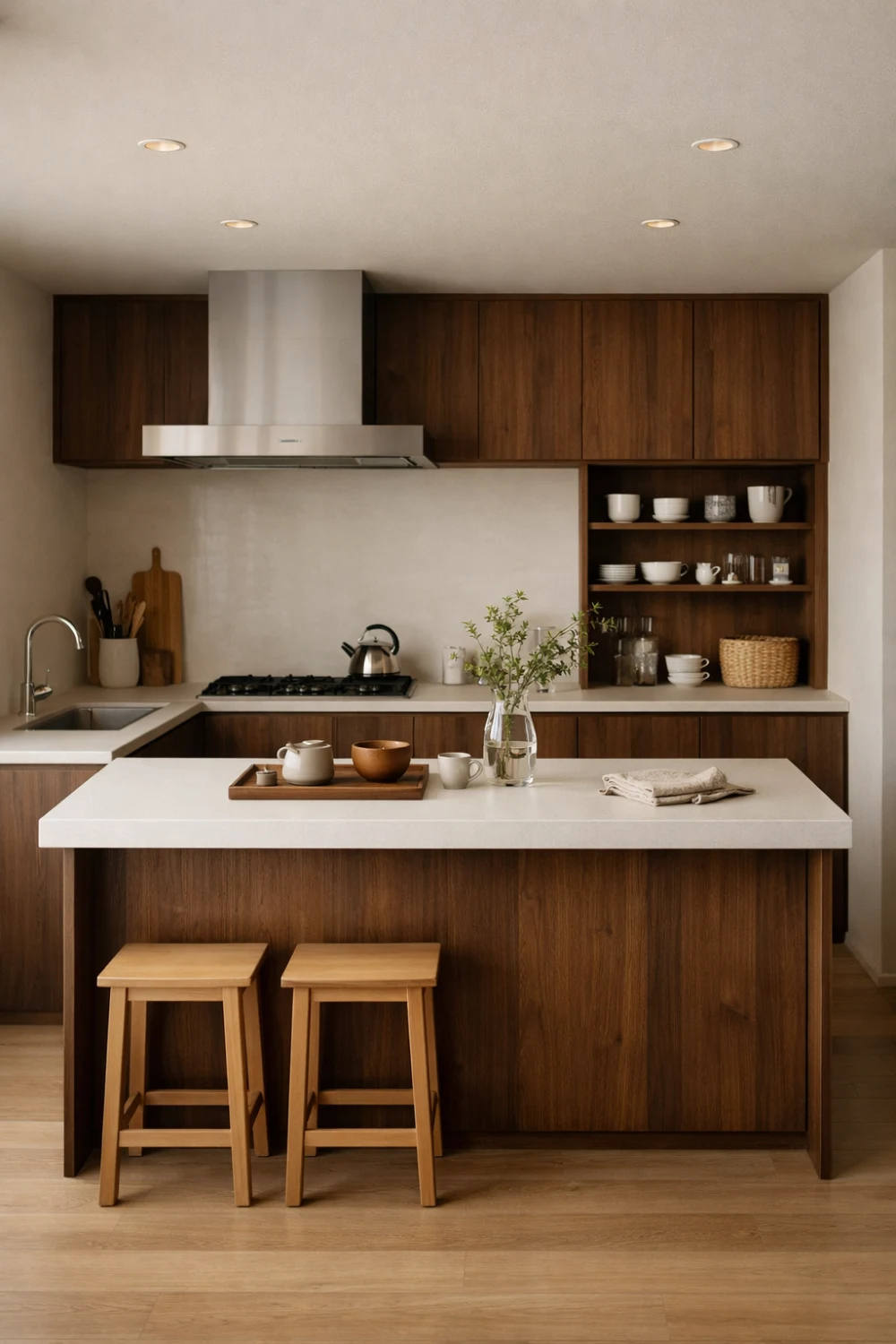
MUJI kitchens focus on timeless design rather than short-lived trends. The combination of natural materials, neutral colors, and thoughtful layouts ensures the kitchen remains relevant for many years.
By reducing visual clutter and unnecessary decoration, MUJI-style kitchens support a slower and more mindful way of living.




Leave a Reply