
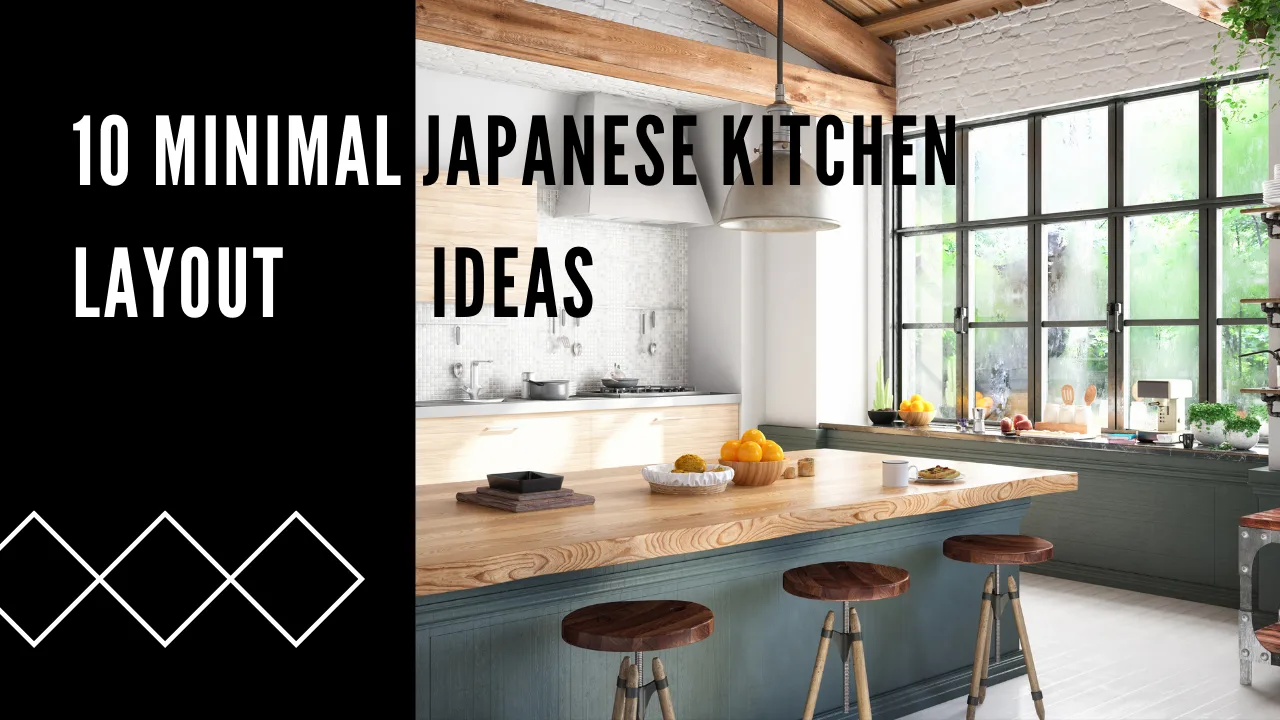
Minimal Japanese kitchen design is gaining global popularity for one simple reason — it creates kitchens that feel peaceful, efficient, and beautifully balanced. Rooted in simplicity and thoughtful organization, these kitchens focus on function over excess, helping everyday cooking feel lighter and more intentional.
If you’re planning a small kitchen renovation or looking for serene design inspiration, these minimal Japanese kitchen layout ideas will help you create a space that feels open, warm, and effortlessly practical.
Why Minimal Japanese Kitchen Design Is So Popular
Japanese kitchens are designed to support daily routines without visual noise. Instead of decorative clutter, the focus is on clean lines, natural materials, soft lighting, and smart layouts. This approach works especially well in compact homes where every inch matters.
A minimal Japanese kitchen doesn’t feel empty — it feels calm.
1. Functional Centerpieces Instead of Decorative Clutter
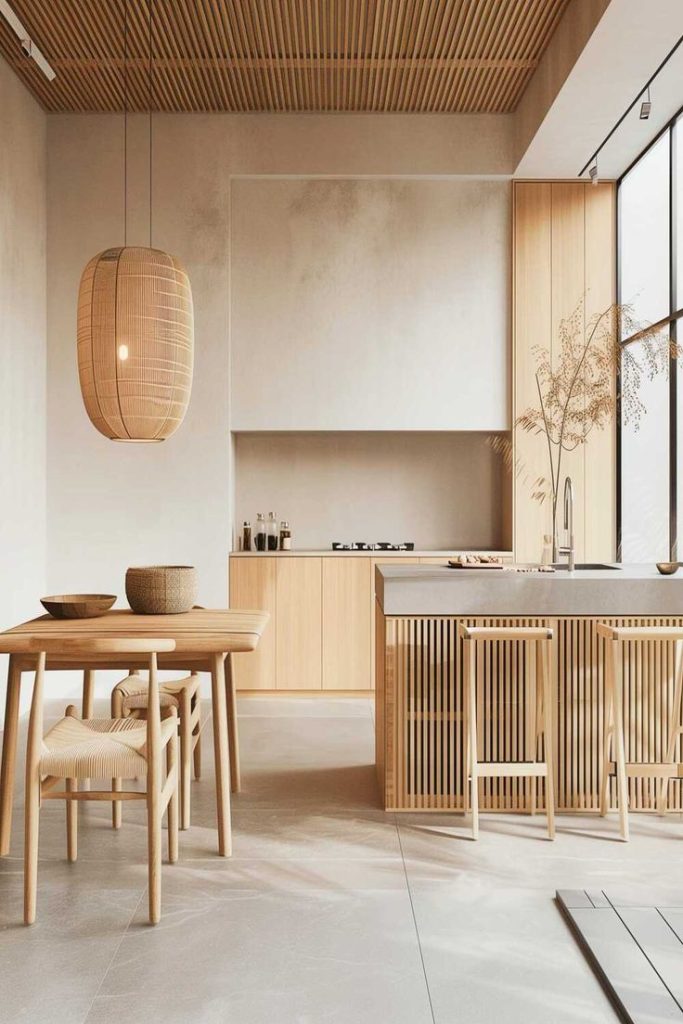
In Japanese kitchens, function becomes the focal point. A kitchen island, wooden prep board, or neatly arranged sink area naturally draws attention without needing decoration. This keeps the space grounded and practical while maintaining visual harmony.
2. Slim I-Shaped Kitchen Layout for Small Spaces
The I-shaped kitchen layout is one of the most effective solutions for narrow or small kitchens. All cooking, washing, and storage elements are arranged along a single wall, reducing movement and keeping the space visually clean.
This layout:
- Saves floor space
- Allows better natural light
- Feels open and uncluttered
Perfect for apartments and compact homes.
3. Natural Wood for Warmth and Balance
Light natural wood is a signature element in minimal Japanese kitchens. Whether used for cabinets, shelving, or flooring, wood softens the space and adds warmth without overwhelming it.
Paired with white or neutral walls, wood creates a balanced environment that feels calm, organic, and timeless.
4. Soft Neutral Color Palette for Visual Calm
Japanese kitchen interiors rely on gentle, neutral tones such as:
- Warm white
- Beige
- Light grey
- Soft cream
These shades reduce visual strain, reflect light, and make small kitchens feel larger. Neutral colors also allow natural textures like wood and stone to stand out beautifully.
5. Hidden Storage for a Clutter-Free Kitchen
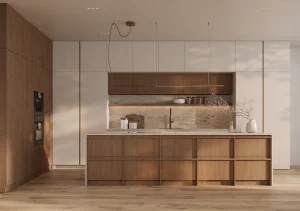
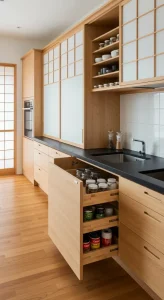
Hidden storage is essential in minimal kitchen design. Seamless cabinets, deep drawers, and integrated pantry units keep everyday items out of sight while remaining easily accessible.
When surfaces stay clear, the kitchen feels:
- More spacious
- Easier to clean
- Visually peaceful
6. Modular Kitchen Units for Flexible Living
Modular kitchen elements — such as movable carts, stackable shelves, or flexible storage units — make Japanese kitchens highly adaptable. These solutions are ideal for small homes where layouts may need to change over time.
Modular designs support efficiency without locking the kitchen into a rigid structure.
7. Compact Sink and Counter Placement
Japanese kitchens are designed around short movement paths. By placing the sink, stove, and prep area close together, cooking becomes faster and more intuitive.
This compact layout:
- Reduces unnecessary steps
- Keeps counters tidy
- Improves workflow in small kitchens
8. Handle-Less Cabinets for Clean Visual Flow
Minimal cabinet hardware plays a big role in Japanese kitchen aesthetics. Handle-less or push-to-open cabinets create smooth, uninterrupted surfaces that blend seamlessly with walls.
This design trick makes kitchens appear larger and more unified.
9. Soft, Warm Lighting for a Relaxed Atmosphere
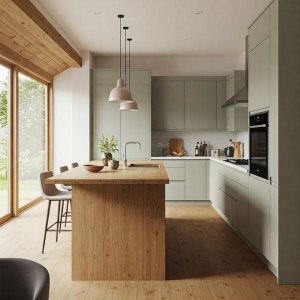
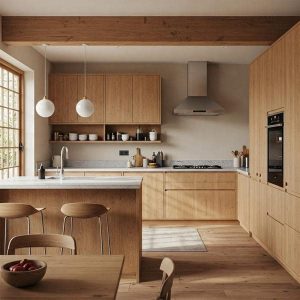
Lighting in Japanese kitchens is subtle and comforting. Warm pendant lights, under-cabinet strips, and low-profile ceiling fixtures provide gentle illumination without harsh brightness.
Soft lighting enhances natural materials and supports a calm cooking routine, especially during evenings.
10. Floating Shelves for Light Visual Structure
Floating shelves offer storage without visual heaviness. They allow the eye to move freely across the kitchen while displaying only essential, well-organized items.
In small kitchens, floating shelves prevent the space from feeling boxed in and encourage mindful organization.





Leave a Reply